The method
Let's cook
The tartlet shells
Rub the cold butter into the flour and salt until it looks like coarse crumbs, then add the yolk and just enough cold water to bring it together. Do not knead it; handled hard, the pastry turns tough. Wrap and refrigerate for 30 minutes.
Roll to about 3mm and line four 9-10cm fluted tins. Trim the edges, prick the bases and chill again for 15 minutes - the second chill is what stops the sides slumping.
Blind bake. Line with paper and beans at 190C / 170C fan for 12 minutes, then remove both and bake another 5-7 minutes until lightly golden and crisp. Bake them fully. The chestnut filling is moist and a half-baked shell goes soft underneath it.
The chestnut cream
Melt the butter and cook the shallot gently for about 4 minutes, without letting it colour much.
Add the garlic, chestnuts, thyme, stock and cream, and simmer gently for 6-8 minutes until the chestnuts are very soft and the liquid has reduced. Stir in the Dijon.
Blend completely smooth. You are after a luxurious savoury cream, not mashed chestnuts. Too stiff, add a splash of cream; loose enough to run, reduce it another minute or two. Season generously and keep it warm.
The shallots and chestnuts
Melt the butter in a small pan and lay the shallots cut-side down until golden. Add the chestnuts, brown sugar and a pinch of salt and let everything caramelise.
Add the balsamic and cook until dark, glossy and sticky. The shallots should be soft enough to eat easily but still holding their shape.
The beef
Take the fillet out of the fridge 20 minutes ahead and season generously. Cold beef in a hot pan cooks unevenly and greys at the edges.
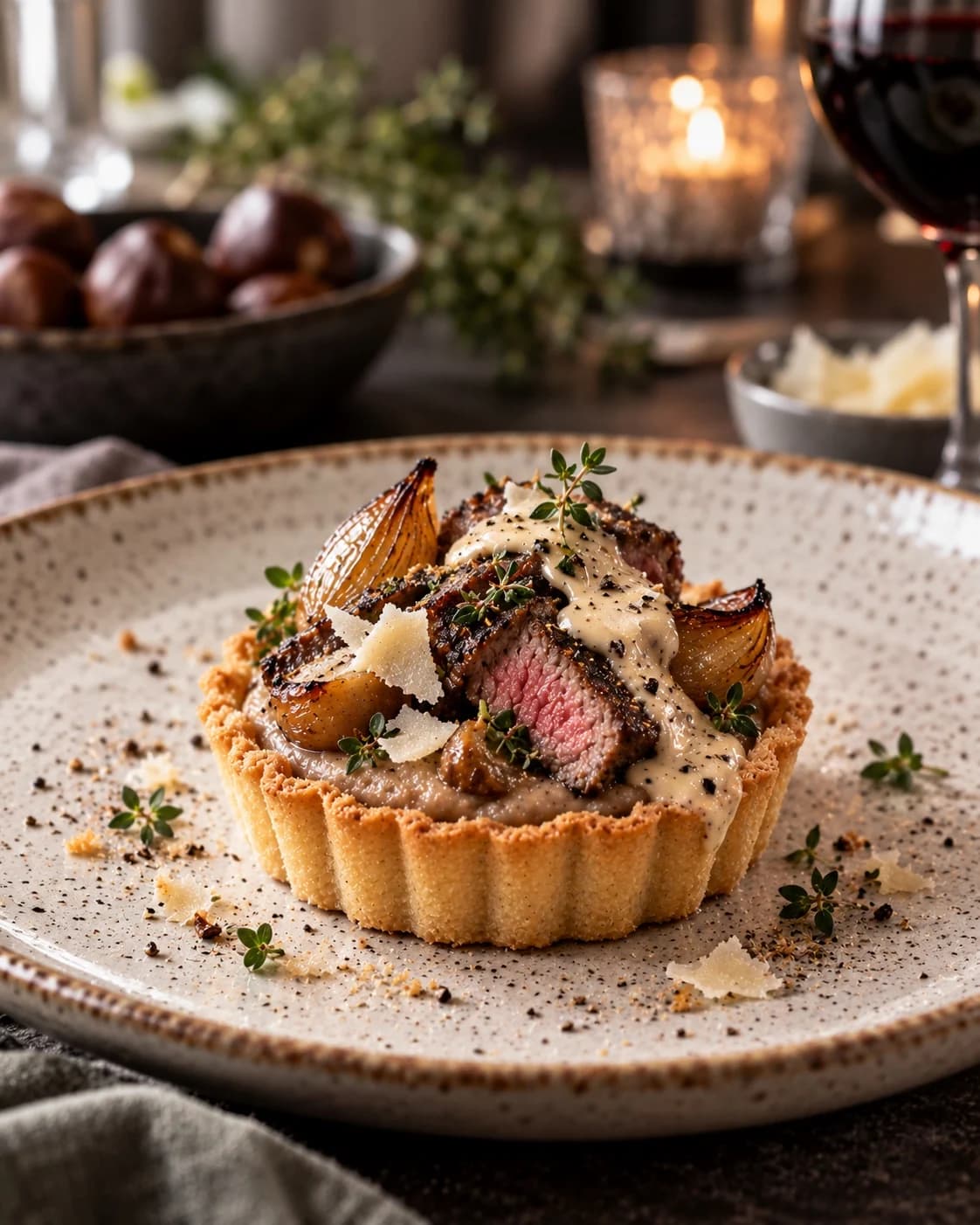
Sear it all over in a very hot pan with the oil, then add the butter, garlic and thyme and baste for another minute or two. For the pink centre in the picture, take it to 52-54C internally.
Rest for 8-10 minutes before slicing. Cut it off the heat too soon and the juices run out onto the plate instead of staying in the meat.
The sherry peppercorn cream
While the beef rests, soften the shallot in the butter. Add the sherry and reduce until almost syrupy, then the stock, and reduce by about half.
Add the cream, peppercorns and Dijon and simmer until it coats the back of a spoon. It should be ivory and glossy, not thick like gravy. Taste before salting - the stock may already be seasoned.
Assemble
Spoon the chestnut cream into each warm shell, almost to the top of the pastry.
Slice the beef into thick pieces and arrange 3-4 per tartlet with the pink cut faces showing. A whole steak on each one turns a starter into a dinner.
Tuck in two caramelised shallot petals and a few chestnut pieces, then spoon a ribbon of the sherry cream over the centre. Do not drown it: the beef and the chestnut layer should still be visible.
Finish with thyme, a few very thin Parmesan shavings and cracked pepper. Keep the garnish restrained - the tart centred with two or three thyme leaves and a shard or two of Parmesan looks better than a scattered plate.
Swaps
Dry sherry is the one to reach for here. Reduced right down it turns nutty and savoury, and because it is less overtly sweet than the alternatives it balances the chestnut and the caramelised shallot rather than piling more sweetness on top.
Madeira or Marsala both work in its place, though each is sweeter, so taste before you add any salt. For a version without alcohol, use extra beef stock with a small splash of balsamic vinegar - you want the depth and a faint sweetness, not the wine itself.