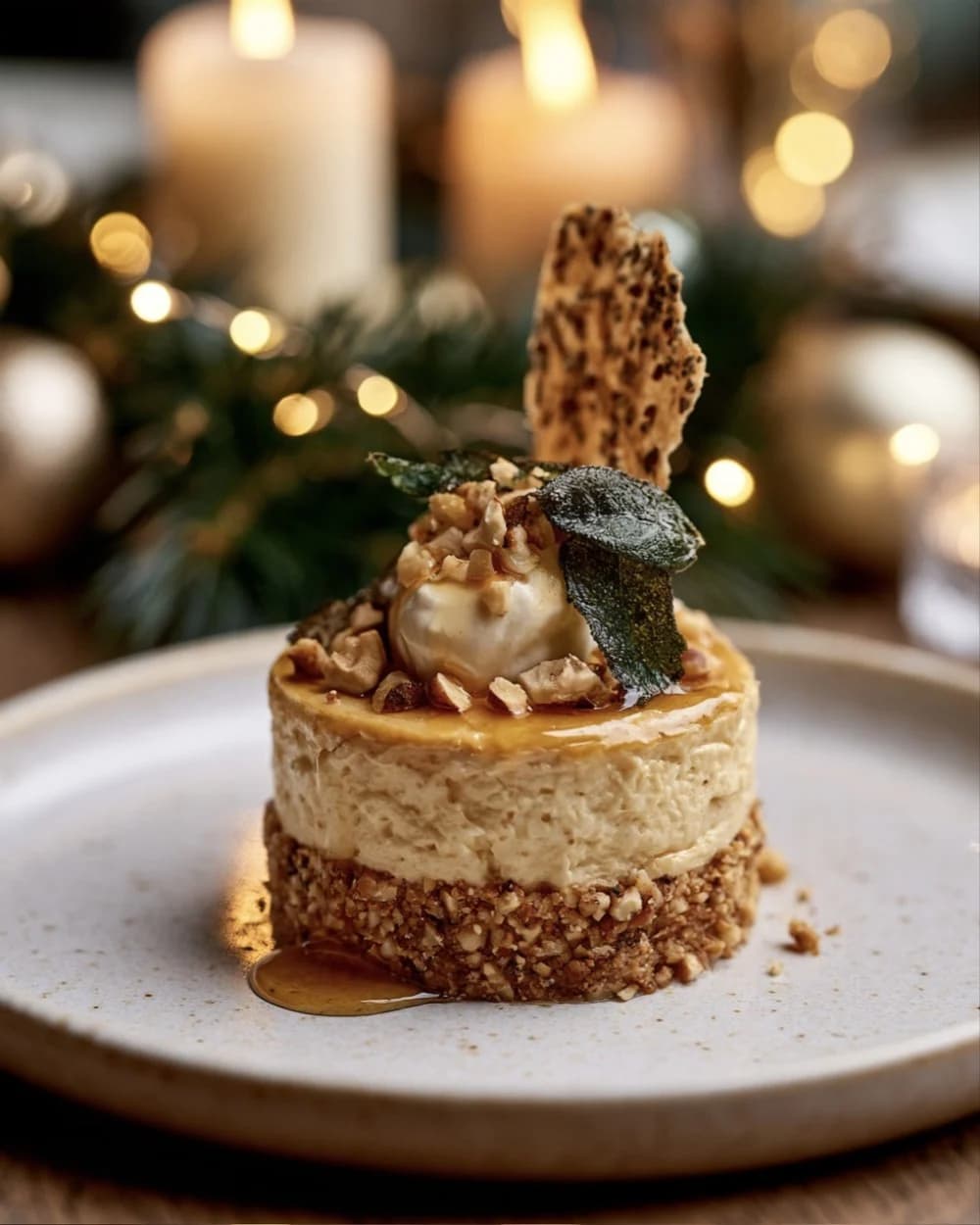
The method
Let's cook
The parsnips
Roast them hard. Heat the oven to 200C / 180C fan. Toss the parsnips with the olive oil, honey and salt and roast 35-40 minutes, turning once, until deeply caramelised at the edges. The colour is the flavour, so take them further than looks sensible.
Puree and cool. Blitz the hot parsnips smooth, then spread on a plate and cool to room temperature. Warm puree will melt the cheese and the layer will never set.
The crust
Make the rubble. Pulse the hazelnuts and oatcakes in short bursts to a coarse rubble with some pieces still the size of a grain of rice. Blitzed to powder it sets like concrete and the fork will not go through it.
Bind it. Pour over the melted butter and stir until every crumb is darkened and the mixture clumps when you squeeze a handful. If it still falls apart, add melted butter a teaspoon at a time.
Press it in. Stand the rings on a lined tray. Spoon in the crust and press it flat with the base of a small glass, then push a little up the inside walls so the band shows from the outside. Chill 30 minutes until firm.
The creamy layer
Start at room temperature. Take the mascarpone and cream cheese out of the fridge an hour ahead. Cold cheese will not go smooth, and beating it harder to fix that only splits it.
Beat the mascarpone and cream cheese alone first, on a low speed, for about two minutes until completely smooth with no lumps at all. This is the single step people skip and it is the one that decides the texture.
Add the cooled parsnip puree, nutmeg, salt and white pepper and beat again on low until the colour is even edge to edge, scraping the bowl twice. Taste and season now; once it is set you cannot change it.
No gelatine here: the mascarpone sets it. If the mixture looks slack, chill it 20 minutes before filling.
Check the consistency. It should drop slowly from the spoon and hold a soft ribbon on the surface for a second or two. Too loose and it will not stand; too stiff and it will trap air pockets. It should be the colour of pale honey.
Assemble
Fill in two goes. Spoon half the creamy mixture over the chilled crust and tap the tray firmly on the worktop to drive out air pockets, then add the rest and tap again.
Level the top. Smooth it flat with a palette knife dipped in hot water and wiped dry. A flat top is what makes the finished tower look sharp rather than homemade.
Chill properly. Two hours is enough for an 8cm ring, and longer does no harm. Rushing this is why towers slump when the ring comes off.
To finish
Unmould cleanly. Run a thin knife around the inside of each ring, then warm the outside of the ring briefly with your hands and lift it straight up, slowly. If the sides smear, it needs another hour in the fridge.
Dress the top and serve at cool room temperature rather than fridge-cold, which mutes everything.