The method
Let's cook
Season early. Pat the ribs dry and season them generously all over. Leave at room temperature for 30 minutes; dry, seasoned meat browns far better.
Sear. Heat the oil in a heavy casserole over high heat and brown the ribs on every side, about 10 minutes in total, working in batches so the pan never crowds. Lift them out. This crust is most of the finished flavour, so take it further than feels comfortable.
Build the base. Lower the heat to medium, add the onion, carrot and celery to the same pan and cook 8 minutes until softened and catching. Add the garlic and tomato purée and cook 2 minutes more, stirring, until the purée darkens.
Deglaze. Pour in the wine, scraping the base to lift everything stuck to it, and simmer hard for 5 minutes to cook off the alcohol and reduce by about a third.
Braise. Return the ribs, add the stock so they are almost covered, and tuck in the thyme and bay. Bring to a bare simmer, lid on, then transfer to the oven at 150°C / 130°C fan for 3½–4 hours. They are ready when a fork slides in with no resistance and the meat pulls from the bone.
Rest and reduce. Lift the ribs out carefully and keep warm. Strain the liquid into a wide pan, press the vegetables to get everything out, then skim the fat from the surface. Simmer 15–20 minutes until it coats the back of a spoon.
Make the purée. Put the celeriac in a pan with the milk, cream and a good pinch of salt. Simmer gently 20–25 minutes until completely tender. Drain, keeping the liquid, and blend with the butter, adding the cooking liquid a splash at a time until silky. Pass through a sieve if you want it restaurant smooth.
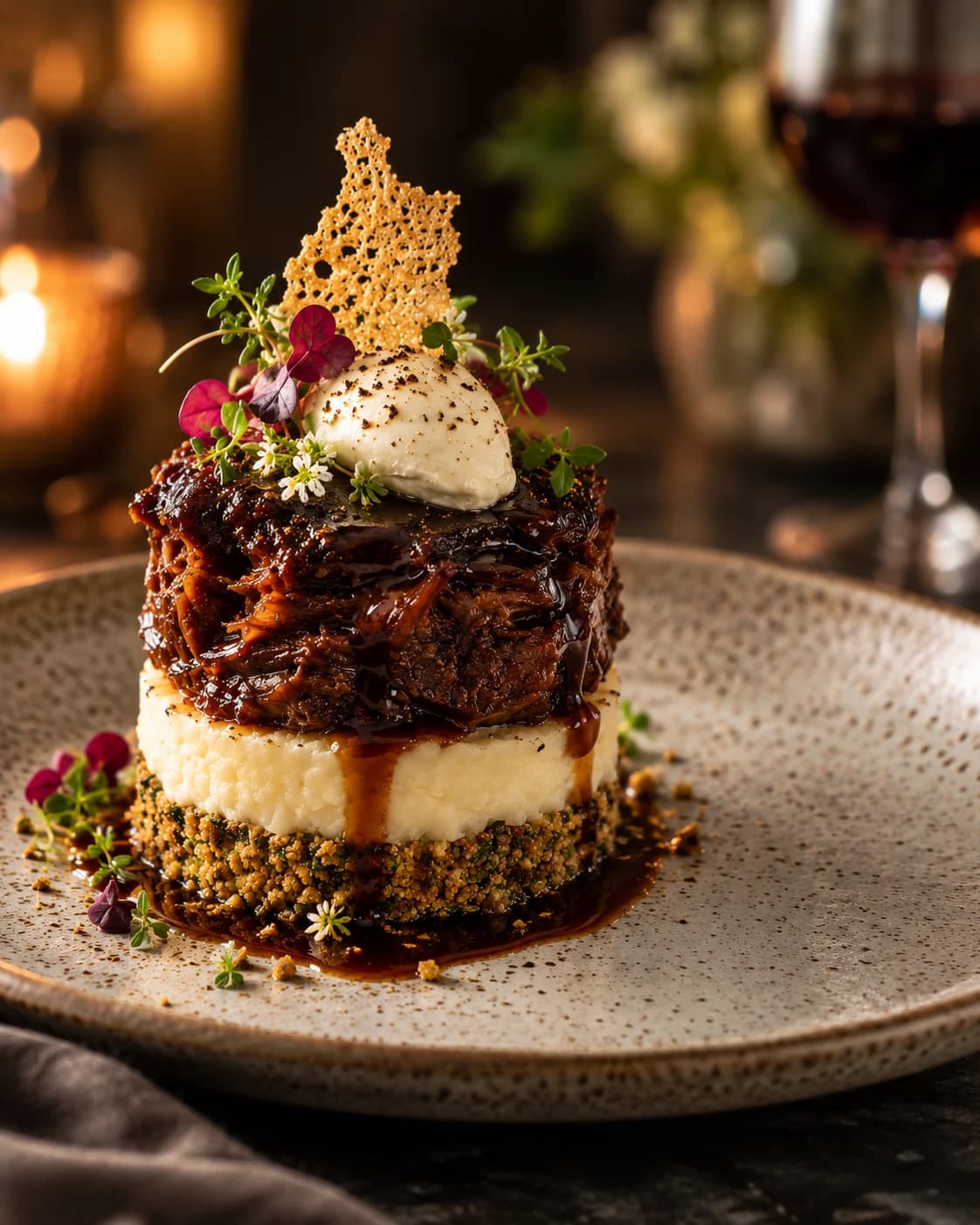
Serve. Spoon the purée onto warm plates and sweep it with the back of the spoon. Sit a rib on top, spoon over the reduction until glossy, and finish with watercress and black pepper.